
Read more
October 12th, 2026
Heat Pump Subsidy Cut: What Homeowners Should Know
Written by: Gareth Whitehill
News
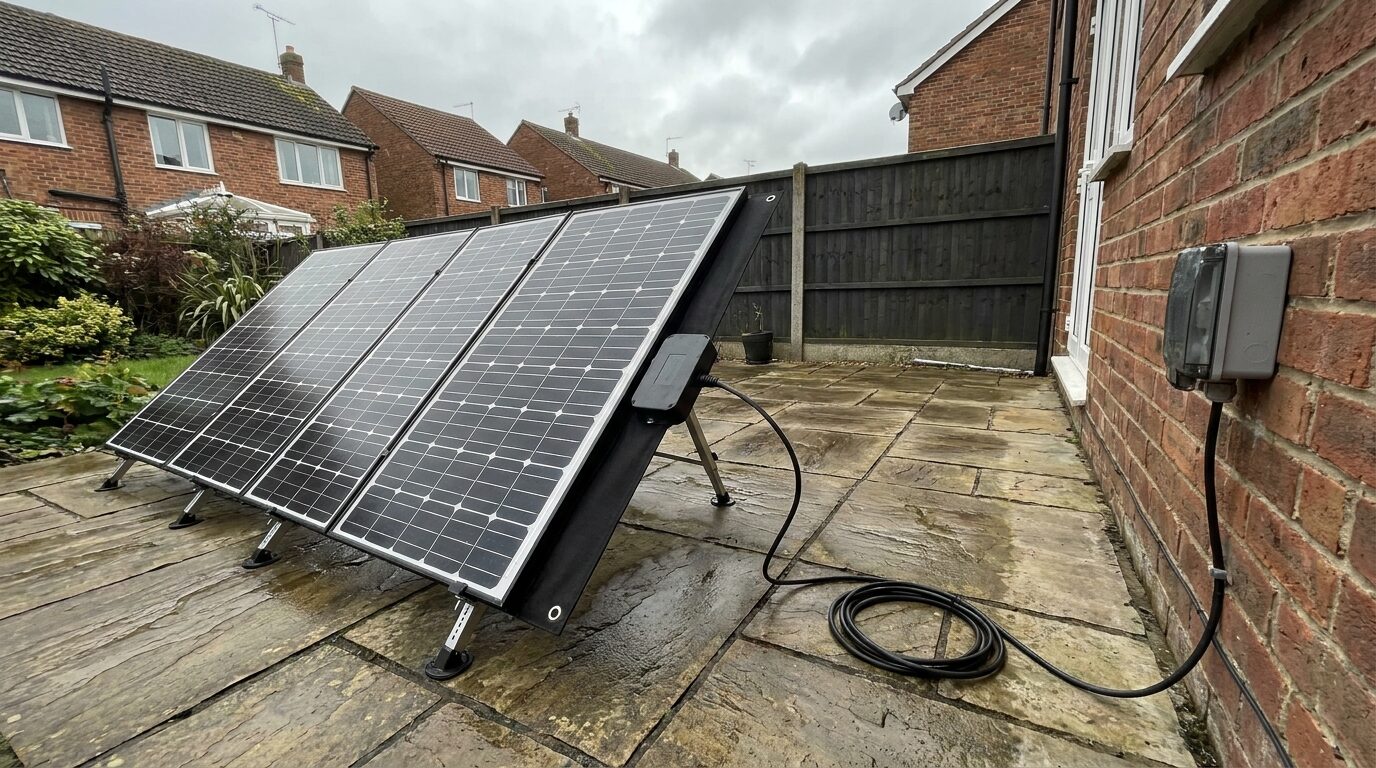
UK supermarkets could soon stock plug-in solar panels, after the government held a roundtable with Amazon, Lidl, Asda and Currys on 18 June 2026. It’s a significant moment — but before you add a balcony panel to your trolley, here’s what you actually need to know.
Plug-in solar panels, sometimes called balcony solar, are small photovoltaic systems — typically up to 800 watts — that connect directly to a standard household socket. They’ve been popular in Germany and the Netherlands for years. The UK government launched a consultation earlier in 2026 to allow them here, and that process is now accelerating, with executives from major retailers visiting Whitehall to discuss getting them on shelves.
The concept is simple. You fix a panel to a south-facing wall, balcony railing, or garden fence, and it generates electricity that flows directly into your home. No professional installation. No planning permission. No MCS certification required.
For renters and flat-dwellers who can’t have roof panels fitted, that simplicity is genuinely appealing.
An 800-watt plug-in system — around the upper limit being proposed — will generate roughly 650–750 kWh per year in the UK, depending on location and how you mount it. At current electricity prices, that’s worth around £170–£200 in annual savings.
That’s not nothing. But a professionally installed rooftop solar system puts those figures in perspective fast. A standard 4 kW array — typical for a three-bedroom home — generates around 3,400 kWh per year. At today’s rates, that’s £850–£1,000 in savings annually, plus what you earn exporting surplus back to the grid through the Smart Export Guarantee.
Plug-in panels also can’t be paired with a battery storage system in the same way. Without battery storage, electricity generated during the day goes to waste if nobody’s home to use it. The real-world savings shrink considerably.
Ministers see plug-in solar as a way to speed up the UK’s shift away from fossil fuels, particularly for the millions of households who rent or live in flats and can’t access rooftop solar. The Warm Homes Plan, published earlier this year, includes a target to install solar panels on three million homes by 2030. Plug-in systems are part of how the government plans to hit that number.
There’s also a broader energy security argument. The past year has shown how exposed the UK remains to global gas price volatility. Plug-in solar panels, even at modest scale, help households generate at least some of their own electricity rather than depending entirely on the grid.
For context: if every household in a typical street fitted an 800W balcony panel, the collective generation would still be a fraction of what a single street of rooftop solar systems would produce. But at a policy level, the government is trying to move quickly and get more people generating something, even if it’s not a lot.
For homeowners with a suitable roof, almost always.
A professionally installed solar system does things a plug-in panel simply cannot. It adds measurable value to your property. It improves your EPC rating. It qualifies you for the Smart Export Guarantee. And most home insurers require your system to be MCS-certified — which a supermarket plug-in product won’t be.
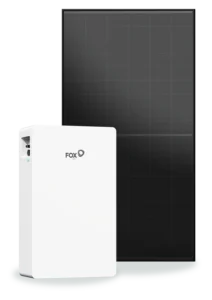
Pair that system with a battery such as a FoxESS EP6 and you gain genuine control over your energy use: generate during the day, store what you don’t need, draw on it in the evening. A 4 kW solar system with a 6 kWh battery can realistically cover 60–80% of a typical household’s electricity needs across the year.
That level of energy independence isn’t something you can get from a single 800W panel plugged into a socket.
None of that is to say plug-in solar is a bad idea. For renters, people in flats, or anyone who wants to start generating their own electricity with minimal commitment, it’s a welcome option. But for homeowners who want to make a real difference to their bills and the long-term value of their home, a full rooftop installation remains the stronger investment by a significant margin.
Grant Store Ltd is MCS-certified and installs solar panels, battery storage, and air source heat pumps for homeowners across England. We carry out a free survey, explain your options clearly, and give you a realistic picture of what to expect — with no pressure to commit on the day.
Get an instant estimate at quote.grant-store.com/solar, or call us on 01942 918844.
Get a quote
Choose what you’d like a quote for and our expert team will be in touch with tailored recommendations and pricing.
Choose a quote type
Excellent 4.8 out of 5
Our blog
Read more
October 12th, 2026
Heat Pump Subsidy Cut: What Homeowners Should Know
Written by: Gareth Whitehill
News
Read more
October 12th, 2026
Solar Panel Planning Permission: Do You Need It?
Written by: Gareth Whitehill
News
Read more
October 12th, 2026
Solar Panel VAT: 0% Relief Ends 31 March 2027
Written by: Gareth Whitehill
News
Read more
October 7th, 2026
Energy Price Cap October 2026: What It Means for You
Written by: Gareth Whitehill
News
Read more
June 22nd, 2026
What the R290 Heat Pump Revolution Means for UK Homeowners
Written by: Gareth Whitehill
News
Read more
June 15th, 2026
Community Battery Storage UK: What the Government’s New Plans Mean for Homeowners
Written by: Gareth Whitehill
News
Read more
June 12th, 2026
Electricity Prices Are Rising Again in July — Here’s What Solar and Battery Storage Can Do About It
Written by: Gareth Whitehill
News
Read more

June 10th, 2026
Solar Panels 2026: The UK Hits 2 Million Installations
Written by: Gareth Whitehill
News
Read more
June 9th, 2026
Oil or LPG Heating? You Could Get £9,000 Toward a Heat Pump
Written by: Gareth Whitehill
News